As parents, we all want our children to grow into confident, independent thinkers—skills that will serve them well both in school and beyond. But how can you actively nurture these qualities, especially in children aged 5-7, when their brains are absorbing information at a rapid pace?
One of the most effective ways to foster independence and critical thinking in children is through play-based learning. At Camp Medford, we firmly believe that the combination of structured play and creative exploration offers children the best opportunity to become confident, problem-solving individuals. In this article, we’ll explore practical ways to encourage independence and critical thinking in kids, and how Camp Medford creates the ideal environment for fostering these essential skills.
Why Independence and Critical Thinking Matter for Kids Ages 5-7
The ages of 5 to 7 are formative years in a child’s development. At this stage, children are transitioning from the early years of dependent learning to becoming more self-sufficient and capable of making their own decisions. Fostering independence and critical thinking at this age isn’t just beneficial—it’s crucial.
Independence allows children to feel empowered, capable, and responsible for their own actions. Critical thinking, on the other hand, helps them analyze situations, solve problems, and make decisions. Both are essential for success in school and later life. Kids who develop these skills early on are more likely to excel academically, socially, and emotionally.
Play-based learning encourages children to think critically while also allowing them to explore and make decisions on their own, which is why it’s such a powerful tool in fostering both independence and critical thinking.
The Role of Play-Based Learning in Building Independence
Play is much more than just a fun activity—it’s a natural way for children to explore their world and develop critical skills. Through structured and unstructured play, children can practice making choices, solving problems, and figuring out how things work. This autonomy builds confidence and encourages independent thinking.
Structured Play and Problem Solving
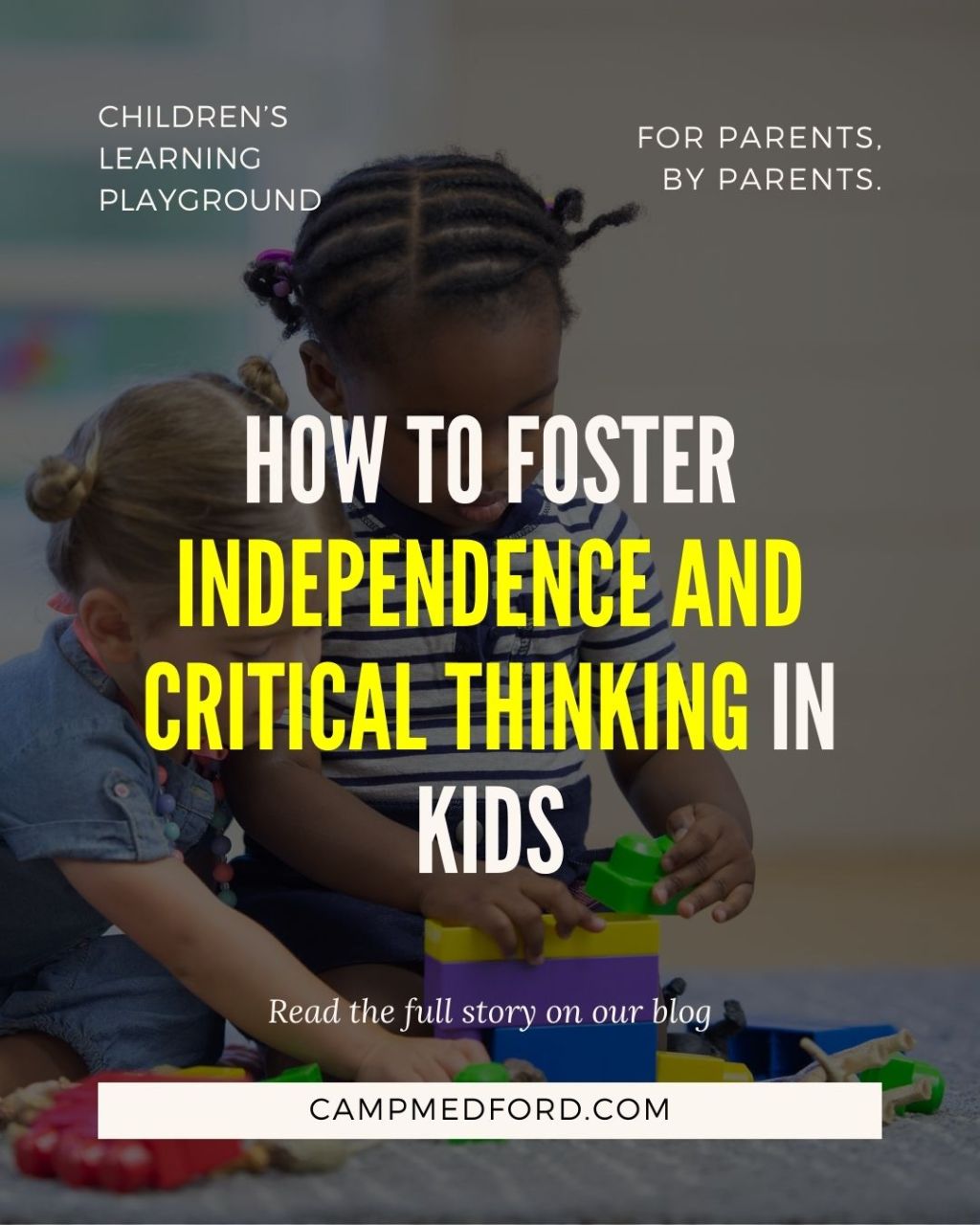
Structured play, such as puzzles, building blocks, or collaborative games, is an excellent way to introduce children to problem-solving. These activities require children to think through solutions, make decisions, and learn from their mistakes—without the need for constant adult intervention.
At Camp Medford, children are encouraged to solve problems independently, whether they’re figuring out how to construct a tower or organizing a creative art project. This type of play helps children realize that they are capable of solving challenges on their own, a crucial aspect of developing both independence and critical thinking skills.
Encouraging Self-Discovery
Self-discovery is another key component of independence. Play-based activities allow children to explore their surroundings, learn new concepts, and experiment with different ideas without the pressure of being right or wrong. Whether it’s through sensory play, creative arts, or building games, children learn best when they are free to explore and make their own choices.
At Camp Medford, we design activities that encourage kids to experiment and discover answers on their own. For example, our music and dance classes allow children to explore rhythm, movement, and creativity, all while fostering self-expression and problem-solving skills.

Practical Ways to Foster Independence in Kids (Ages 5-7)
Children thrive when they are given opportunities to make choices and take on responsibilities. Here are some practical ways you can help your child become more independent:
Promote Choice and Responsibility
Allowing children to make their own decisions, such as choosing which activity to do or which color to paint with, gives them a sense of ownership over their learning and encourages independent thought. This approach helps children develop decision-making skills and fosters a sense of responsibility.
At Camp Medford, we create a variety of learning experiences that give children the chance to make choices and take responsibility for their learning. Whether it’s selecting a cultural activity or leading a group game, we empower children to make decisions that shape their experience.
Encourage Self-Help Skills
Self-help skills are important in fostering independence. Simple tasks like dressing themselves, tidying up, or preparing a snack not only build a child’s confidence but also teach them that they can take care of themselves. Encouraging children to do things on their own helps them develop a sense of competence and self-sufficiency.
At Camp Medford, we help children practice self-help skills in a supportive environment. For example, we encourage children to clean up after themselves after art class or take part in group activities that require them to work independently and in teams.
Create Opportunities for Exploration
Allowing children to explore new concepts, environments, and activities helps foster their natural curiosity and independence. Exploration can be as simple as a nature walk, a cultural event, or engaging in a creative activity. The more opportunities children have to explore, the more independent and self-assured they will become.
Our learning spaces at Camp Medford are designed to provide children with rich opportunities for exploration. From cultural immersion activities that teach about Bajan heritage to hands-on science experiments, we offer a variety of activities that encourage children to learn through exploration.
How Critical Thinking is Fostered Through Play-Based Learning
Critical thinking is a skill that develops over time, but it can be nurtured early through engaging play. Through problem-solving activities, creative challenges, and open-ended games, children are encouraged to think critically about the world around them.
Problem-Solving Activities
Hands-on learning experiences, such as building structures with blocks or solving puzzles, promote critical thinking by encouraging children to think logically, try different approaches, and solve problems. These types of activities engage children in active learning, allowing them to think critically while also fostering creativity.
At Camp Medford, we incorporate problem-solving activities that encourage critical thinking and allow children to practice making decisions. Whether it’s figuring out how to balance blocks or designing their own play area, children are given opportunities to think critically about the tasks at hand.
Encouraging Open-Ended Questions
Asking open-ended questions during play helps children think critically about their actions and decisions. Questions like “What happens if you try this?” or “How can we make this work?” encourage children to think about possible outcomes and explore different solutions.
We actively encourage critical thinking in our programs by asking open-ended questions that help children reflect on their choices. For instance, during creative play or group discussions, we ask questions that prompt children to think critically about their actions and the results they create.

Creating a Safe, Supportive Environment for Independent Learning
A safe environment is essential for fostering independence and critical thinking. Children need to feel secure and supported as they explore, take risks, and make decisions. At Camp Medford, we ensure that all of our activities are designed with safety in mind, while also allowing children the freedom to explore and learn independently.
Balancing Guidance and Autonomy
While independence is key, it’s equally important to provide guidance when necessary. Striking the right balance between support and autonomy is crucial for fostering independent thinkers. We make sure to guide children in their learning process, but also encourage them to make decisions on their own.
How Parents Can Support Independence and Critical Thinking at Home
As parents, you play a vital role in fostering your child’s independence and critical thinking skills. Here are a few ways you can support your child’s growth at home:
Model Problem-Solving
Children learn by example, so it’s important to model problem-solving behaviors at home. When faced with a challenge, talk through your thought process and show your child how you approach problem-solving. This will help them develop critical thinking skills of their own.
Provide Opportunities for Independent Play
Give your child the freedom to play independently. Whether it’s through puzzles, drawing, or imaginative play, independent play helps children practice making decisions and solving problems on their own.
Why Us?
Fostering independence and critical thinking in children is an investment in their future success. Play-based learning provides the perfect platform for children to explore, make decisions, and develop essential life skills. We are committed to providing a safe, engaging, and educational environment where children can grow into confident, independent thinkers.
Join us for hands-on activities that nurture creativity and problem-solving—because every child deserves to be a confident learner. Visit Camp Medford today and watch your child’s independence and critical thinking skills flourish!
Disclaimer: This content is provided freely by Educational Professionals with expertise in early childhood development and play-based learning.


