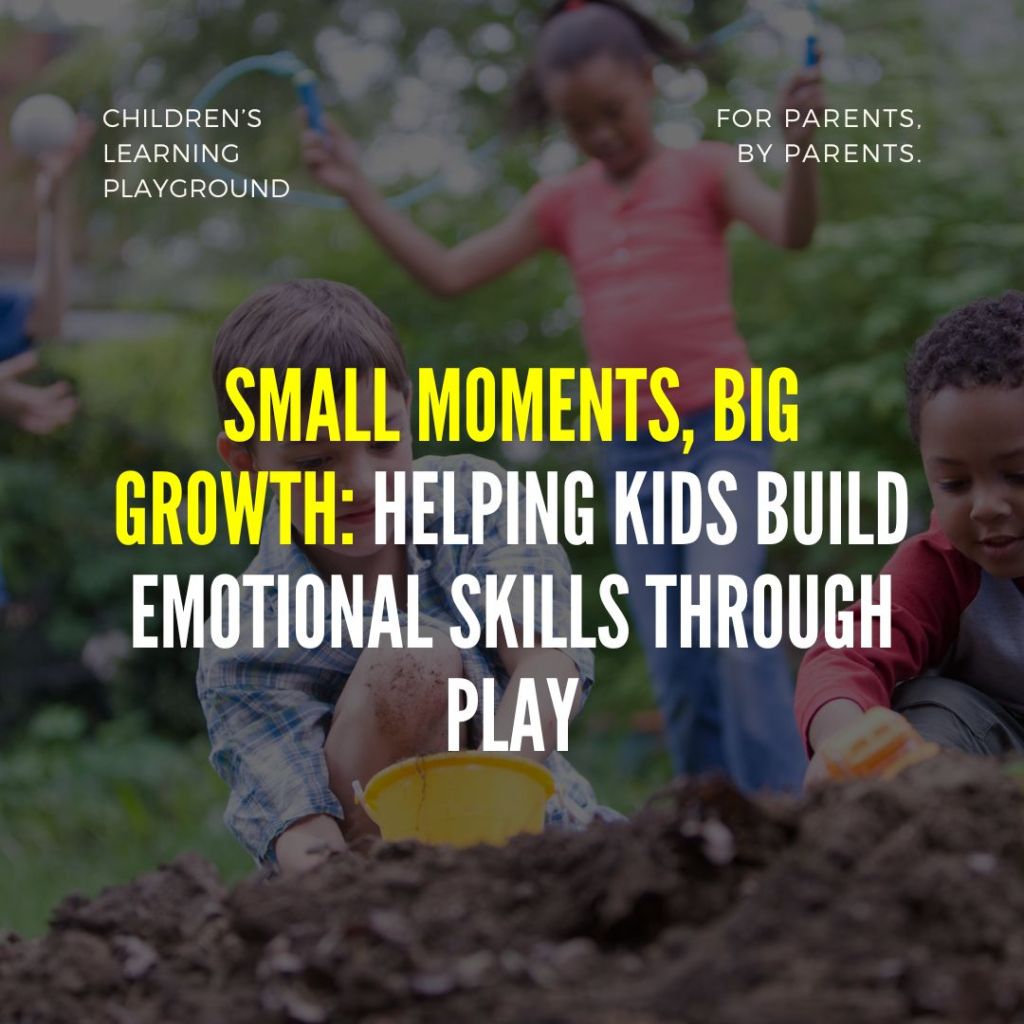
Emotional Growth Happens in the Everyday
You may not notice it at the moment—when your child offers a toy to a sibling, steps up to lead a game, or melts down over losing at a game—but these small, everyday situations are actually shaping some of the most important skills your child will ever learn.
Emotional growth in childhood isn’t about big lectures or milestone moments. It’s about the quiet magic that happens through play—when a child feels safe, supported, and allowed to explore their world without pressure. It’s through play that they begin to understand themselves, others, and how to navigate life with empathy, confidence, and resilience.
As parents, we play a key role in this process. Not by scripting every moment, but by noticing the little ones that matter and creating opportunities for learning to unfold naturally. Here’s how simple acts of play can nurture the emotional skills that matter most—and how you can encourage them in your daily life.
Why Emotional Development Should Be Part of Every Play Session
Before children can succeed academically, they need a solid foundation of emotional intelligence. Skills like empathy, patience, frustration tolerance, and communication don’t come from memorization—they’re learned through experience, observation, and reflection.
Play is the perfect environment for emotional development because it allows children to take risks, solve problems, and navigate social dynamics in a low-pressure, high-reward setting. When children play freely, they learn to understand emotions, recover from setbacks, and relate to others.
As a parent, you don’t need a psychology degree to support this. You just need to be present, responsive, and open to turning ordinary moments into learning opportunities.
The Power of Sharing: Empathy Begins With Taking Turns
If you’ve ever watched two toddlers negotiating over who gets the truck, you know that sharing is a big emotional lift. It’s also one of the first ways children begin to understand empathy and fairness.
You can help your child develop these skills by encouraging turn-taking activities:
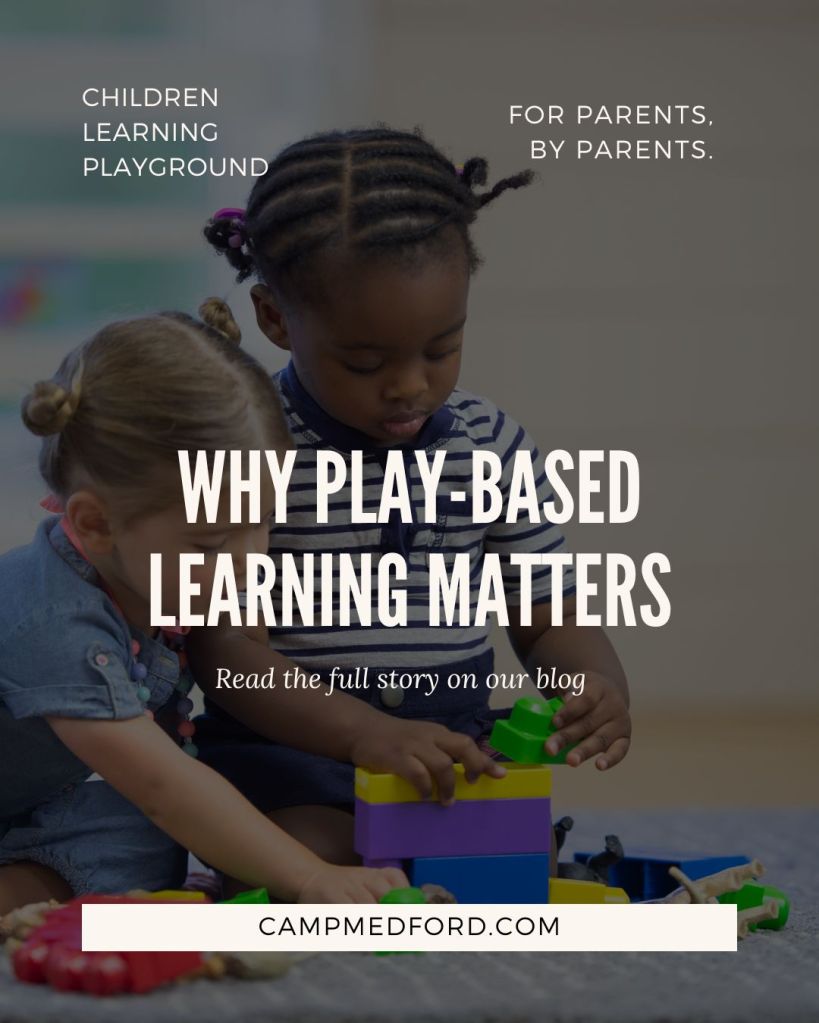
- Build something together with blocks and take turns adding pieces.
- Set up a snack station where your child helps serve family members.
- Play simple games where winning isn’t the focus, but taking turns is.
When tensions arise—and they will—acknowledge the feelings involved (“I know it’s hard to wait your turn”) and model compromise. These moments teach children to pause, consider others, and regulate their emotions.
Leadership in Play: Letting Kids Take the Lead
Children naturally crave moments to take the lead. Whether it’s assigning roles in pretend play or making up new rules to a game, leading gives them a sense of ownership and confidence.
Allowing your child to lead play scenarios supports:
- Decision-making and planning
- Communication and negotiation
- Responsibility and follow-through
You can encourage this by saying, “Let’s play restaurant—what role do you want to be in charge of?” Or, “Why don’t you make up the rules for today’s scavenger hunt?” Step back and watch how they thrive when trusted to guide.
Leadership also teaches kids that with power comes responsibility. When they see how their decisions affect others, they learn to lead with both confidence and care.
Learning to Lose: How Resilience Is Built One Game at a Time
Losing isn’t fun—for kids or adults. But it’s a vital part of learning resilience. Games provide a gentle, safe space to experience disappointment and recover.
If your child struggles with losing, here are a few ways to support them:
- Play games where luck, not skill, determines the outcome.
- Model sportsmanship by showing grace whether you win or lose.
- Reflect after the game: “It’s okay to feel upset. What could we do differently next time?”
Rather than avoiding games that might cause frustration, lean into them with compassion. Over time, your child will build the internal muscle to bounce back from failure, try again, and keep perspective.
Encouraging Emotional Growth While Traveling or Away From Home
For traveling or expat families, maintaining emotional routines can feel tricky—but play remains a constant.
Here’s how to foster emotional growth no matter where you are:
- Use role-play to prepare for transitions: “Let’s pretend we’re going on a plane!”
- Explore local culture together and talk about feelings related to change.
- Create a “calm-down kit” for travel—sensory toys, drawing supplies, or a special storybook.
Play becomes a bridge during uncertain moments. It helps children process change, feel secure, and stay connected to their emotional world—even in unfamiliar environments.
The Small Stuff Is the Big Stuff
The next time you watch your child share a toy, bounce back after a tantrum, or ask to be in charge of game time—take a moment to notice the growth happening in real-time. These aren’t just small wins. They’re signs of developing emotional intelligence that will shape your child’s relationships, resilience, and confidence for years to come.
As parents, we don’t have to manufacture teachable moments. They’re already there—woven into our playtimes, our walks, our game nights, and our cuddles after a meltdown. What matters most is how we show up in those moments and create space for our children to learn, feel, and grow.
📣 Join Camp Medford and discover how we can support your child’s learning journey!
Disclaimer:
This content is provided freely by Educational Professionals for informational purposes only.


