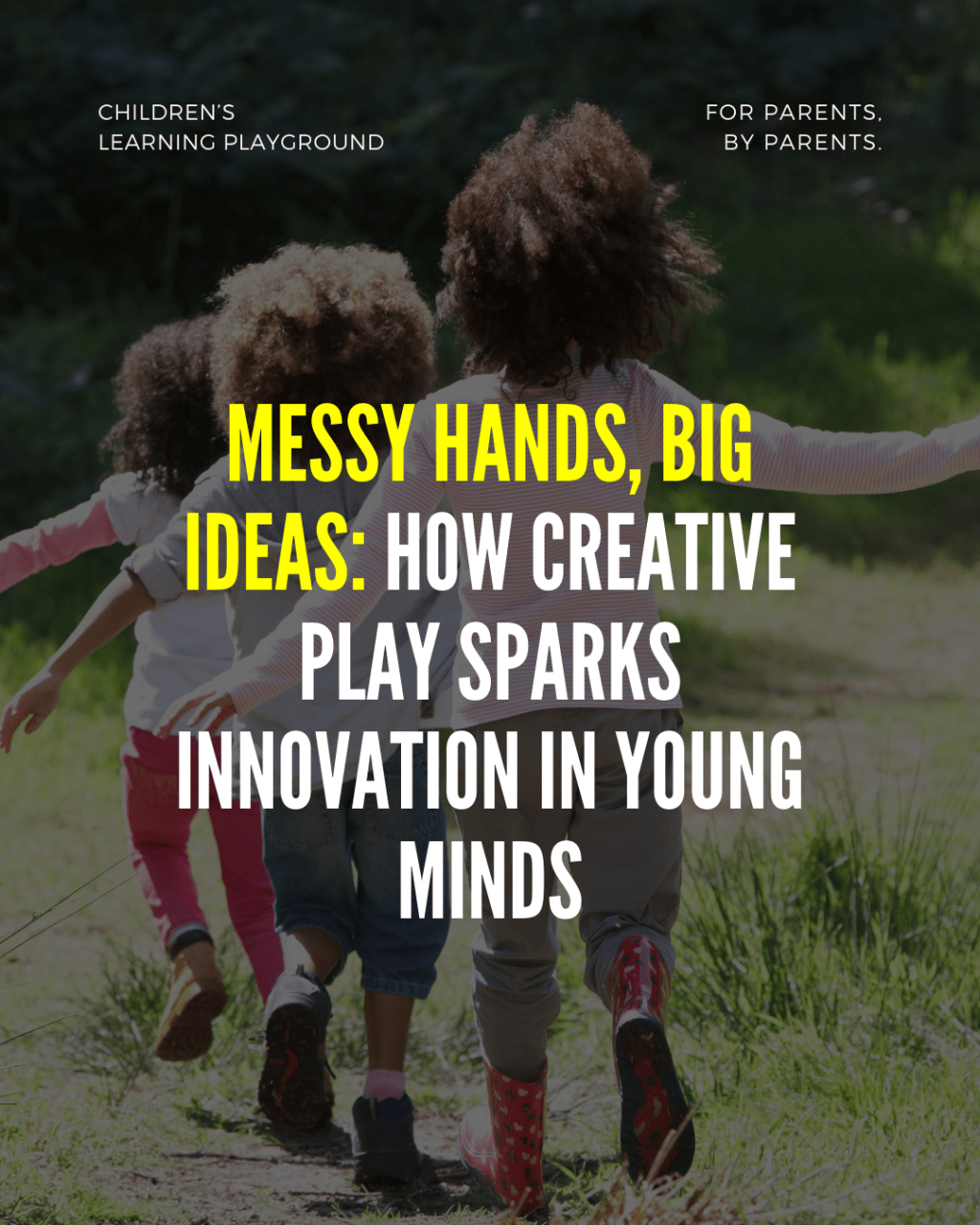
We explore the power of imagination—why painting outside the lines is often where the best thinking begins.
Why Innovation Starts with a Little Bit of Mess
There’s something magical about watching a child dive into a pile of paint, their hands completely covered, eyes lit up with curiosity. To many adults, it might look like chaos. But to an early childhood educator—and to many parents who’ve leaned into play—it’s a sign of something incredible: innovation in progress.
In a world that increasingly values neatness, order, and early academic milestones, it’s easy to forget how vital unstructured, imaginative play is for developing critical thinking, flexibility, and problem-solving. Yet, the most innovative ideas—the ones that change industries, communities, or even just a tough day at home—often begin in childhood, with messy fingers and big imaginations.
As both a parent and an educator, I’ve learned to trust the process. Because when we let our children explore, imagine, and create without fear of being “wrong,” we give them something far more valuable than perfection. We give them the confidence to think for themselves.
Creativity Is a Skill—And Play Is the Practice Ground
Many parents think creativity is something a child is either born with or not. But that’s simply not true. Like language or math, creativity is a skill—and it grows best when nurtured early and often.
The brain in early childhood is particularly responsive to creative stimulation. When children engage in open-ended activities like drawing, building, and pretend play, they activate neural pathways that support cognitive flexibility, focus, and emotional regulation. And they learn something even more important: there isn’t always one “right” answer.
Creative play builds the kind of thinking that adapts, iterates, and solves problems. When a tower falls, they rebuild it taller. When their idea doesn’t work, they pivot. It’s not about making perfect art or writing impressive stories—it’s about learning to try, to imagine, and to keep going.
Painting Outside the Lines: Art as a Tool for Problem-Solving
One of the easiest ways to encourage creative thinking is to introduce more open-ended art at home. Not crafts with instructions—but real process art. That means letting your child explore materials without a finished product in mind.
Let them finger paint, stamp leaves, paint rocks, or use cardboard to build strange new inventions. Offer tools and materials—like sponges, cotton balls, sticks, tape, fabric, or clay—and let them decide what to do with them.
When a child chooses what to make, how to make it, and when it’s done, they’re developing essential decision-making and problem-solving skills. They’re also learning to trust their instincts and see “failure” as an opportunity to try again.
Pro tip: Set up an “art invitation” one afternoon—just a table with a few fun tools and no expectations. Step back. You might be amazed at what your child builds from their own imagination.
The Innovation of Pretend Play: Imagination as Intelligence
If you’ve ever seen your child turn a stick into a sword or a cardboard box into a spaceship, you’ve witnessed pretend play in full force. It’s not just adorable—it’s deeply important work.
Pretend play allows children to explore social dynamics, build empathy, and test theories. When they assign roles to siblings or dolls, they’re practicing leadership. When they make up a new rule or storyline, they’re exercising creative thinking and storytelling.
You can encourage this kind of play by creating space for imagination. Keep a “costume basket” full of old clothes, scarves, and hats. Save cardboard boxes, paper towel rolls, and packaging for building. And most of all—say yes when your child invites you into their world. Your willingness to play along signals that their ideas matter.
When children invent new worlds, they’re preparing to innovate in the real one.
Creative Play in Unexpected Places: Rethinking Routines
Creative thinking doesn’t require special tools or expensive toys—it just needs space to bloom. You can build creativity into daily routines, especially when you approach them with curiosity and flexibility.
Try some of these everyday innovation ideas:
- Bathtub painting: Let them use bath crayons or shaving cream to draw on the walls.
- Kitchen creations: Allow safe “experiments” with ingredients, even if the recipe isn’t real.
- Indoor obstacle courses: Challenge them to build their own maze from cushions and chairs.
- On-the-go storytelling: Make up a collaborative story during long car rides or walks.
If you’re traveling, take advantage of new environments. Use natural materials—shells, leaves, driftwood—as inspiration for sculptures or sorting games. Visit markets or cultural sites and ask your child what they notice, wonder, or would design differently.
The more you invite creativity into your day-to-day life, the more confident your child becomes in exploring their ideas, no matter where they are.
What Innovation Looks Like in a Child’s World
Innovation in childhood doesn’t look like writing code or starting a business. It looks like trying something that might not work—and doing it anyway. It looks like sticky hands, enthusiastic storytelling, or mixing every color together just to see what happens.
And it’s messy. But so is real learning.
To foster innovation, we have to let go of control and lean into curiosity. Instead of asking, “What are you making?” try asking:
- “What does that feel like?”
- “What do you think would happen if…?”
- “What would you like to try next?”
When we show interest in the process—not just the result—we give our children permission to explore and expand their thinking. We show them that creativity isn’t something you “get right.” It’s something you practice.
Let the Paint Spill and the Ideas Flow
Some of the best thinking starts with messy hands and an open mind. When we create space for creative, child-led play—whether through art, storytelling, or unstructured exploration—we’re planting seeds for the kind of thinking our world needs more of: bold, curious, and resilient.
So let them paint outside the lines. Let them build strange inventions and change their minds halfway through. Let them imagine impossible things. Because those small, messy moments? That’s where big ideas begin.
📣 Join Camp Medford and discover how we can support your child’s learning journey!
🔒 Disclaimer:
This content is provided freely by Educational Professionals for informational purposes only.

