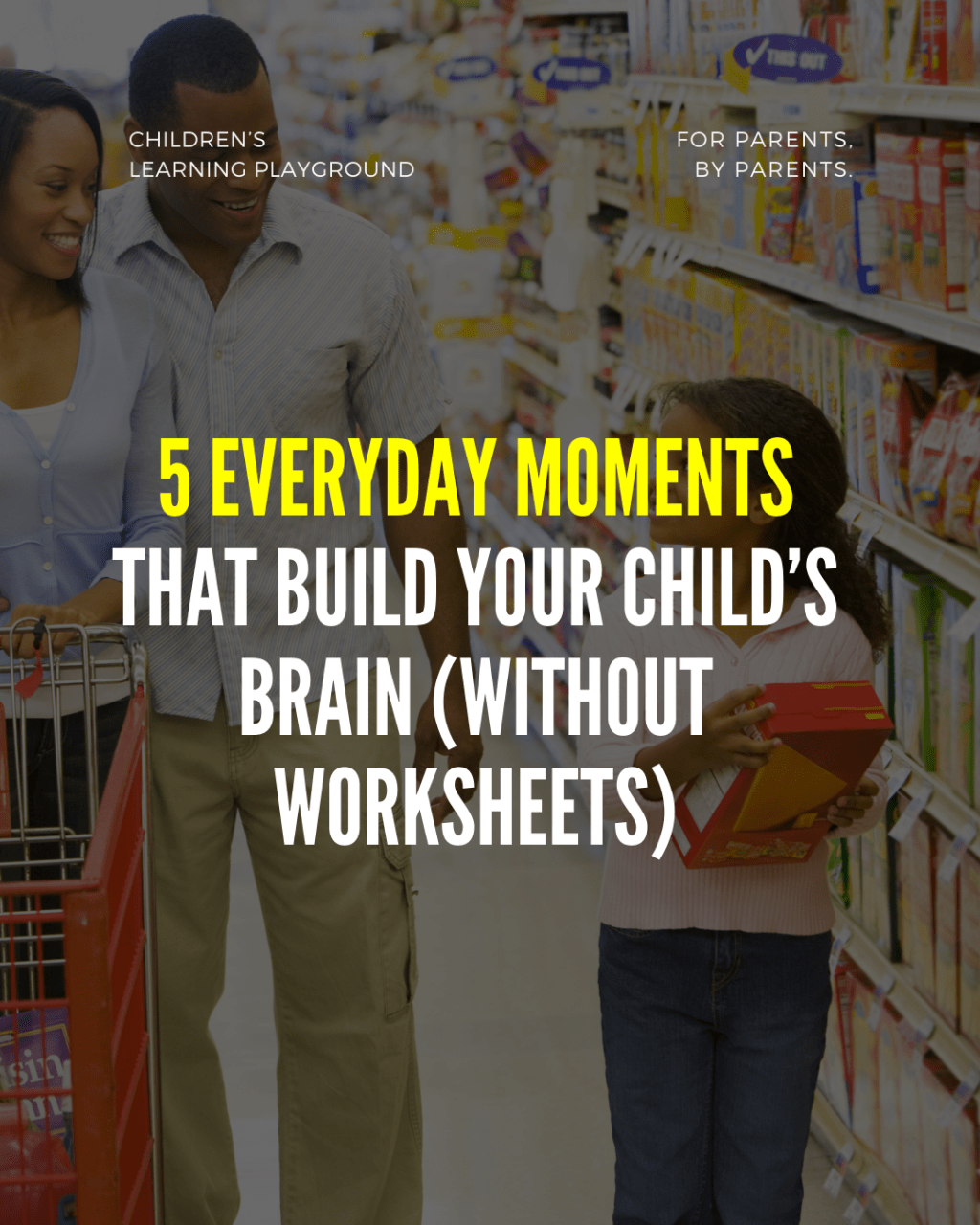
You’re at the supermarket, your child beside you, eyes wide as they count fruits going into the bag. Without realizing it, they’re practicing math, learning to categorize, and building focus. The truth is, your child doesn’t need flashcards or worksheets to build their brain. Some of the most powerful learning happens in the ordinary moments we often overlook.
As a parent and early childhood educator, I’ve come to appreciate how routines like cooking, errands, and even laundry can be packed with developmental opportunities. Every child learns differently, and while school has its place, home is where the foundation is built—one real-world experience at a time.
1. Grocery Shopping: A Real-Life Math and Language Lab
Next time you head to the market, bring your child along not just as company, but as a co-learner. Grocery shopping offers a multi-sensory environment rich in vocabulary, problem-solving, and critical thinking.
At the Market or your local shop, children can count items, identify colors and shapes, and weigh fruits. Older children can compare prices or track a shopping budget. Let them write or read the shopping list. Ask open-ended questions like, “What can we cook with these plantains?” or “Which one do you think is heavier?”
These simple exchanges improve numeracy, literacy, and decision-making skills. They also build confidence as children see their input valued in meaningful tasks.
2. Cooking: A Full Sensory STEM Experience
Measuring ingredients teaches volume and fractions. Stirring batters or kneading dough strengthens fine motor skills. Watching ingredients change form as they heat introduces basic chemistry. And narrating the process—“Let’s pour one cup of flour, now mix until smooth”—develops vocabulary and sequencing.
Even toddlers can rinse vegetables, tear lettuce, or stir with a wooden spoon. Cultural recipes add another layer of learning, offering a chance to discuss family heritage, language, and traditions.
3. Bathtime: More Than Just Clean
For many families, bathtime is a cherished routine. But beyond hygiene, it’s a moment rich with sensory and emotional development.
Pouring water into different-sized containers teaches volume and cause-effect. Foam letters or washable crayons introduce literacy. Sponges, cups, and rubber toys offer texture exploration and pretend play.
It’s also a time to connect emotionally. Children often talk more openly when they’re relaxed. Use the quiet to ask about their day, name emotions, or sing songs. Questions like, “How does the warm water feel?” or “What story should we make with your bath toys today?” nurture language and creativity.
4. Cleaning: Building Responsibility and Brainpower
Many parents shy away from involving kids in chores, but cleaning is a goldmine for developing executive function, coordination, and confidence.
Sorting laundry teaches categorization and size comparison. Folding clothes strengthens spatial reasoning and motor planning. Sweeping and dusting improve coordination. And with upbeat music or a timer, chores become a fun challenge rather than a task.
Let your child sort socks, fold towels, or wipe surfaces. Talk them through the steps: “First we pick up the toys, then we put them in the basket.” This sequencing is the same mental process used for reading and math later on.
The bonus? They begin to see themselves as capable contributors, which supports social-emotional growth.
5. Walks and Errands: Observation + Language Development
A simple walk around the block or trip to the pharmacy can become a learning safari.
Point out street signs, local plants, construction vehicles, or neighborhood dogs. Encourage your child to ask questions and describe what they see. For older kids, introduce mapping: “How do we get to the post office from here?”
Scavenger hunts are another great twist—ask them to find things by color, shape, or sound. These activities build vocabulary, environmental awareness, and curiosity.
For families who are new to Barbados, these small outings are especially helpful in helping children adapt. They begin to feel connected to their surroundings, increasing their sense of security and belonging.
You’re Teaching All the Time
We often feel pressure to schedule learning into worksheets or apps. But children are wired to learn through interaction, movement, and play. When we involve them in daily life with intention, we meet them where they are—in the moments that feel natural, joyful, and safe.
As a parent and educator, I’ve learned that what sticks isn’t what we teach—it’s what we do together. You already have what it takes to help your child grow. The next time they help stir a pot, fold a shirt, or count bananas at the market, just remember: their brain is blooming.
Join Camp Medford and discover how we can support your child’s learning journey—through play, creativity, and real-world experiences that stick.
Disclaimer: This content is provided freely by educational professionals and does not replace individualized developmental or therapeutic advice.

